It’s time to share your story!

CALL FOR SUBMISSIONS: SapphFic Eclectic, Volume Seven

Editors: Robyn Nyx and Brey Willows

Publisher: Butterworth Books

Publication Date: November 1, 2026

Theme: Short stories featuring women loving women (all permutations, including trans and non-binary folks)

The clue is in the title. We’re looking for stories across genres, themes, tropes, and norms. Thrill us with your words. Weave fine stories of romance, erotica, and general fiction. Create characters who defy norms or hold defiantly onto labels that help them define who they are.

We want emotional depth and excitement, instant connections and lifelong love. We want tales of women loving women that are powerful, touching, and maybe even whimsical.

We’re particularly interested in stories from writers who haven’t been heard from much (yet!). If you’re an unpublished writer who can’t seem to get that break or a relatively new author trying to find their place in the published world, send us a story, wow us with your words, and introduce yourself to the amazing SapphFic readership. And if you’re an established author who just fancies throwing in a short story, we’d love to see that too!

Deadline for Submissions: June 30, 2026 (early submission encouraged)

Guidelines for Submissions (PLEASE follow the below):

  • Unpublished short stories only
  • Word count: 2,000 – 4,000 words
  • Electronic submissions only to: sapphfic.eclectic@butterworthbooks.co.uk
    • e-mail header: LesFic Eclectic_ Author Name or Pseudonym _Story title
    • MS Word document attachment (story)
    • E-mail body: story title, author legal name, pseudonym if any, address, phone number, e-mail address, word count, 50 word bio
  • Story Format:
    • Times New Roman; 12 pt
    • Double-spaced; standard paragraphing; no HTML
  • General Info:
    • Submission receipt within 7 days
    • Payment: none. This book is free to readers so we can get your stories into lots of TBR piles!

Life is messy. Read books.

It’s an oversimplification, perhaps. Reading books won’t make everything better in a world that seems determined to continually catch fire in new places while old fires continue to burn.

Reading can give you a reprieve. Stories can give you hope.

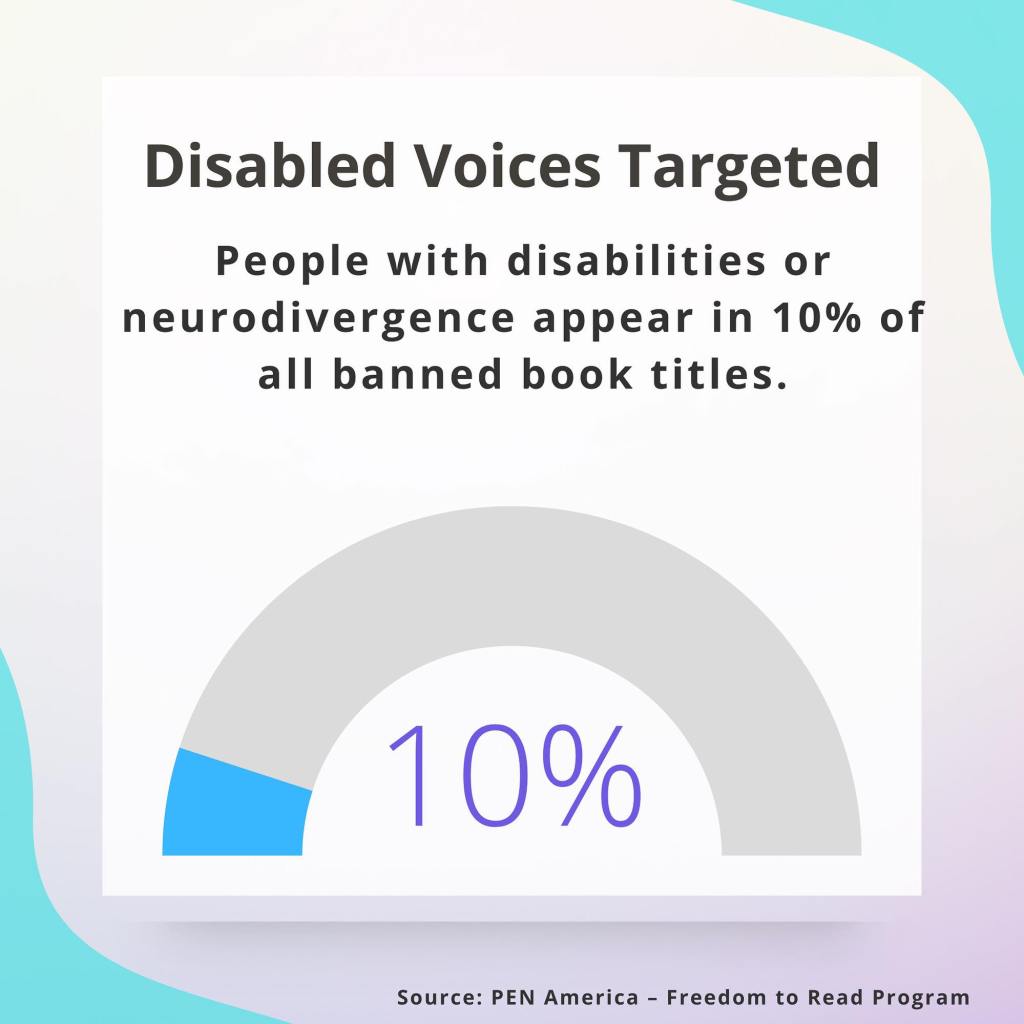
We were proud to be part of the social media campaign put on by I Heart Sapphic and the Golden Crown Literary society for Banned Books week. The week was all about encouraging awareness about the book banning issue happening around the world. The graphics below were created by PEN America, and the numbers are scary.

Banning books is about authoritarian control. It’s saying, “I don’t want to read this, so no one should read this.” It’s also saying “I believe in certain things, and that means you don’t get to read or think anything that doesn’t agree with what I think.”

That, my friends, is a dangerous, dangerous place. One we’ve been in before and which led to a horrific section of history. And this is why we can’t stay silent. That’s why we must use social media as a tool for good, for outreach, for empathy, for understanding, and for connection. Free will and free thinking create a stronger world. One where someone in control demands that freedom curtailed can quickly become one where fear and silence become the norm.

We simply can’t let that happen.

How can you help? Social media makes it really easy, if you’re in that part of the cyber chaos. Sharing author’s posts, letting people know about the books you’re reading, and generally making books a conversation topic is a great, simple way to help. Here’s a little list, again from PEN America:

See those social media icons? You can find Butterworth Books on all three of them. If you’re over there, give us a follow. Check out our posts. And if you can, hit the share button and spread the word. Help give other readers a bit of hope and a bit of light in the dark.

A Starvation of Confidence by Rose Matthews

Photo by Hebert Santos on Pexels.com

It’s Queer the Shelves next week and I know because I’m counting down the days. Being invited onto the panel of new authors has been the most exciting opportunity I’ve had all year; it’s also filled me with so much imposter syndrome that I’ve spent an hour trying to finish this sentence. When I was asked to write a 4,000 word short story for Sapphic Eclectic I was all over it. But 400 words on ‘what it means to be a storyteller’? Total paralysis! Couldn’t get a word on the page. So, like a fool, I’ve spent the past week in search of a cure for this syndrome. Here are my findings:

Firstly, I turned to a friend. I told her I felt like a fraud and an idiot calling myself a ‘storyteller’. I was hoping for sympathy. Instead, she pointed to the spreadsheet I use to track my daily writing schedule and confirmed that, yes, I was being an idiot, but I was also undeniably telling stories. I looked at my (beautiful) graphs and I thought: nah.

Aren’t storytellers supposed to be magical? Magic’s for other people, not me.

So, I turned to other blogs. Good lord, what a mistake: a deluge of talented, worldly, brilliant writers. Awards won, readers connected with, breakthroughs made. I was screwed! I’d never done any of this! Surely all these authors had burst onto the scene, fully formed, and had never had any insecurities ever. Again, I kept asking: what do you think you’re doing? Leave this to the professionals.

Finally I came back to the place I’d been avoiding: this blank page. Only by putting one word in front of the other does the problem become blindingly obvious: imposter syndrome is a starvation of confidence. It plagues you with ‘not _____ enough’ statements and it belittles the belief your friends have in you and it stops you from seeing all these talented people in your community as, y’know, people.

So that’s my cure for imposter syndrome: keep on keeping on. In other breaking news water’s still wet, but I think this might be a lesson everyone has to teach themselves at some point. So if you’re reading this and no one’s ever told you: if you tell stories, you’re a storyteller. The magic isn’t just for other people. It’s for all of us.

We need you now more than ever by Valden Bush

I wake up in the morning and find the world is chaotic.

There are people fighting for survival in terms of land rights, religion and money. Every day we are bombarded with more information than I personally want or need. BUT the thing that I’ve found disturbing is the way that trans, lesbian, and people of color are being erased from the both the world and people’s consciousness. It is happening quietly, through the back door in many situations and censorship can take several forms. Removing the lesbian tag for marketing purposes on Amazon and Insta is one of these steps.

Why do I mention this?

We need storytellers to be loud and proud, to tell the world that we cannot be removed. To show, through our stories, that lesbians will continue to thrive despite everything. We have been fighting for what we have for a long while and we need to continue. Storytellers, artists and musicians are important to show the way. So keep writing and keep reading, we need you more than ever.

I reach for pen and paper by E.V. Bancroft

Like many children, I grew up being read to—whether it was a poem about smugglers and highwaymen or a beloved classic like The House at Pooh Corner, I absorbed those stories and the worlds they opened up. As a shy girl with a speech impediment, I dreaded attention and rarely spoke. Instead, I took every opportunity I could to escape into the wild and magical realm of words.

The written word was always my friend.

By the age of six or seven, I was inventing stories and writing poems. Whenever asked what I wanted to be when I grew up, I always said, “a writer.” Writing gave me a way to express feelings I couldn’t verbalise—and it still does. Like Cyrano de Bergerac I could only declare my love through poems, and deal with the grief of break up or loss through the written word. Even now, when I’m writing and want to tap into raw emotion, I reach for pen and paper. There’s something more organic about that physical act.

For me, storytelling is a way to reveal hidden emotions, forge connections, and share my unique perspective—a perspective grounded in empathy and understanding. Stories can spark change, pose questions, and challenge the status quo. They always have. Think of Dickens, Kafka and George Orwell—writers who brought injustice to light through fiction. My greatest hope is to write something that resonates with someone, makes them feel seen, and gives them hope.

That, to me, is success.

People remember how a story made them feel. We connect deeply with individual experiences—like the solitude of The Martian, or the unspoken ache of a hidden relationship in Taylor Jenkins Reid’s Atmosphere. Some stories stay with us forever. Those are two of mine. Which ones have stayed with you?

We are… by Maggie McIntyre

Who are the story tellers? Members of the oldest profession in the world?  The weavers of dreams? We wander the hedgerows gathering wool from the thousands of sheep who have passed through our own and others’ subconscious, and then start to knit them into socks and mittens to keep out the cold. We can spin gold from straw, create heartbreak, happiness or humour.  We are vital to humanity. We hold its history and predict its future.

We are also artisans, creating a fifth dimension of reality with our bare hands. We can have rough, work-worn hands, we have sharp ears and sharper tongues. We can assassinate, sabotage and subvert. We are imps with sharp little knives. Sometimes we bite, sometimes we soothe and sometimes we save lives.

“We can spin gold from straw, create heartbreak, happiness or humour.”

Maggie McIntyre

We heal our own hurts by turning them into flirtations and kiss the world’s bruises better.

We are amazing.

We are silly.

We are eternal apprentices.

We spin yarns.

We are the story tellers, and our work is what defines us as human beings within a chaotic and terrifying universe


Read Maggie McIntyre’s story Tightlipped in SapphFic Eclectic, Volume 6!

The Purpose of My Storytelling by Cathy Rose

In Ireland a storyteller is called a seanachaí (shan-ah-key).

Loosely translated it means the bearer of old lore. As with many cultures, stories were passed down through generations, and details changed as each seanachaí told their version. These stories are important, even if the narrative has changed, as it helps us to keep the old lore alive and means we continue traditions and events that would have otherwise been forgotten.

Storytelling was always a feature of my childhood, whether it was my Granddad making up another tale about the Púca (Pooka) to scare me at Halloween, or having a book read to me before I could read and then becoming an avid reader myself. In reading I found myself in stories when I often couldn’t find myself in the real world. I enjoyed the escape. As I got older, I felt the need to tell the stories that were always roaming around in my brain at odd hours of the day and night. Stories that have changed in configuration many times, much like the lore the seanachaí told.

“I have held onto the story I want to tell.”

Cathy Rose

Through it all, I have held onto the story I want to tell, whatever version it might be on now. The characters take shape and the setting around them develops. Writing stories helped me to learn more about myself and in turn, I ended up with more stories to tell. Whether they’ll transcend the generations remains to be seen but I’m happy to know that my stories are out there for people to read, and if they find a little bit of themselves that they couldn’t find anywhere else, then the purpose of my storytelling has been fulfilled.


Watch for Cathy Rose’s story, I Found Myself, in SapphFic Eclectic, Volume 6!

It’s nearly that time…

Photo by Alexander Grey on Pexels.com

And we can’t wait.

The Queer the Shelves Book Festival in Nottingham is this coming Saturday. Twenty-two authors, seventy readers, an after-party, old friends, new friends, books, books, books… It’s always a fantastic day, and this year is going to be just as awesome.

If you haven’t already, go check out the fabulous blogs from the authors who are attending. We asked them to tell us about their favorite writing memory, and we got some really great answers.

Tickets for the day program sold out three months in advance, and that tells us something really important; our community wants community. Regardless of who the attending authors are, regardless of what we’ve got planned, our LGBTQ readers wanted to be there. How amazing is that? If you’re one of the ticket holders, we can’t wait to see you. If you didn’t manage to get a ticket, we still have room at the after-party, so you can join us there and have some food, listen to some readings, and have a good laugh.

And, if you’re around on Friday night, we’re going to have a casual meet up at The New Foresters Pub. We’ll be there about 7pm, and hopefully we’ll gather outside and have a lovely, chilled out night. Feel free to come along!

See you soon.

Shedding Mumbles by Tania Almond

Photo by Su00f3c Nu0103ng u0110u1ed9ng on Pexels.com

My number one cardinal rule is: Don’t overshare on social media. Use the trauma in your life to inform your writing. Sadly, I’m not much of a rule-follower so my life haemorrhages out into everything; my writing, my social media posts, or idle chit-chat in a supermarket queue to any stranger who is too bored or busy to move to another checkout. I have verbal diarrhoea and no filter. 

I exfoliate the trivial aspects of my life, shedding mumbles of discontent as I field endless calls and tasks, managing the chaos that surrounds our foster children’s lives while I recover from major surgery following removal of a cancerous tumour from my left cheek. Sixty-two stitches, one for each year of my life, in a u-shape from below my ear to under my eye and down past my nose. It’ll heal but, in the meantime, it hurts like hell and has turned me into an inflamed older woman.

To my wife: I’m sorry. You know how much I love you.


About Tania:

Tania Almond is a Hampshire, UK based writer of contemporary women’s fiction. 

Tania’s books describe the lives and loves of lesbian women in the contemporary world. Her characters’ lives are led by neurodiversity, a sense of purpose, and hope.

Tania’s writing is infused with a love of nature, women, travel and her life’s experiences: from growing up on a council estate in a shipbuilding town in Cumbria, surrounded by one of the most beautiful landscapes in Britain; to working across Europe and in the European Parliament; to living on the south coast of England with her partner Cath, their foster children and two aging rescue cats, Ronnie and Ruby.

You Know When You Know was Tania’s first indie published novel, available on Amazon, Apple Books and Barnes & Noble.

She is touting Life of Riley around literary agents, which ironically is about longing for a place to call home. She is also writing An Island Romance, a lesbian romance, and researching Book of Eillish, about an aging charity worker, set in Kenya.

https://taniaalmond.com

Written into Our DNA by AJ Mason

Photo by Google DeepMind on Pexels.com

Every human is a storyteller. It is written into our DNA. We tell our stories through words, voice, art or dreams. From the cave drawings of our distant ancestors to the social media posts of the present; we seek ways in which to communicate our thoughts and ideas. To convey and make sense of the world that surrounds us.

I came to writing late, but I have always told stories. Often to amuse, sometimes to inform, occasionally to deflect or abjure. My comfort zone is Science Fiction, where I can build worlds in which I can explore and expose the human experience.  While I write, the world around me slips from view and my imagined landscapes take shape. My characters talk to me and argue over their development arcs. Often, a planned journey takes a different turn as I come to know them better. To sink into my mind and take the time to imagine a scene, to explore it with all my senses, is one of life’s great pleasures.  

Then the moment comes when I must let my story go free. I send it on its way, anxious for its reception in the hands of others. Hold my breath to see how it is received. But good reviews or bad I won’t stop being a storyteller. I am only human.


Connect with AJ Mason